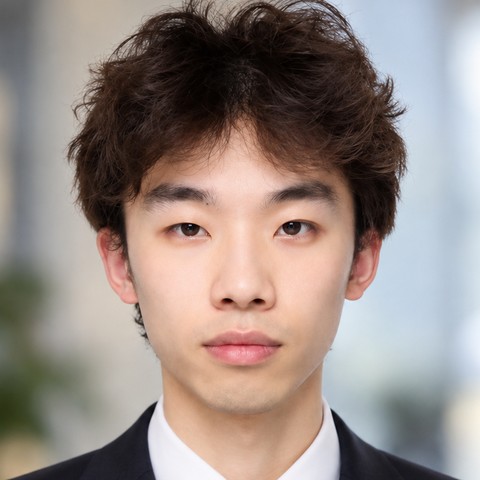
I am a PhD student in Computer Science at the University of Idaho. I am advised by Dr. Alex Vakanski, working on machine learning for nuclear engineering in collaboration with Idaho National Laboratory. Before that, I earned my bachelor’s degree in Computer Science from the University of Idaho in 2023.
My research applies machine learning and natural language processing to nuclear engineering, from predicting the properties of structural materials to supporting nuclear power plant safety assessment. Both directions share the same constraint: nuclear data is costly to produce and scarce, so the methods have to do more with less.
Alongside this, I also have experience in computer vision, particularly image segmentation.
Department of Computer Science, University of Idaho · with Idaho National Laboratory
Machine learning for nuclear materials properties: proposed a temperature-dependent, geometry-corrected stress descriptor for creep rupture life prediction, and a domain-adaptation method that correlates full-sized Charpy impact properties with sub-sized specimen tests.
LLM framework for nuclear power plant event classification: co-developed a two-stage pipeline pairing knowledge-informed prescreening with a BERT-based model, filtering out more than 97% of irrelevant records at 93.4% average accuracy across four event types, and deployed it to Idaho National Laboratory as a web tool.
Contributed to a public, machine-learning-ready creep property dataset released with open-source code.
Projects
Spear of Ares: Tube-Deployed Reentry Vehicle for a Mars Weather Station
Senior Capstone, Aug 2022 – May 2023 · University of Idaho · Partner: NASA Ames Research CenterBest Booth Presentation, EXPO 2023
On a seven-person interdisciplinary team, I helped design, build, and flight-test a tube-deployed reentry vehicle prototype for a potential Mars weather station. The payload combined a spring-deployed drag skirt, custom multilayer printed circuit boards, and an ESP32 flight computer running FreeRTOS with publish–subscribe inter-process communication, supported by a ground tracking GUI. We validated it with a high-altitude balloon drop in February 2023.